The 2026 World Cup is the biggest ever staged — 48 teams, 104 matches, 16 cities scattered across three countries and three time zones. Which makes it, quietly, a geography exam. Half the stadiums aren’t in the city they’re named after, one venue sits 2,240 metres up where the air itself plays defence, and the “New York” final isn’t in New York.
Twenty questions on all of it. And a disclosure before kickoff: we also run World Cup Kickoff Times, a little site that answers the only question harder than these — what time the matches actually start in your time zone.
The tournament
01The 2026 World Cup is the first hosted by how many countries?▶
Three — the United States, Mexico, and Canada. Every previous World Cup had one host, or two (Korea/Japan, 2002).02How many host cities are there?▶
Sixteen: eleven in the US, three in Mexico, two in Canada.03How many teams — and how many matches?▶
48 teams playing 104 matches, up from 32 teams and 64 matches. It’s the biggest expansion in World Cup history.04Where does the tournament kick off on June 11?▶
Estadio Azteca, Mexico City — with Mexico playing the opener, as host tradition demands.05And where does it end on July 19?▶
MetLife Stadium, sold as the “New York New Jersey” final. More on that little piece of geography in Round 3.06Which of the three host countries has never staged a men’s World Cup match before?▶
Canada. The US hosted in 1994, Mexico in 1970 and 1986 — Canada’s men’s World Cup hosting debut comes in Toronto and Vancouver.
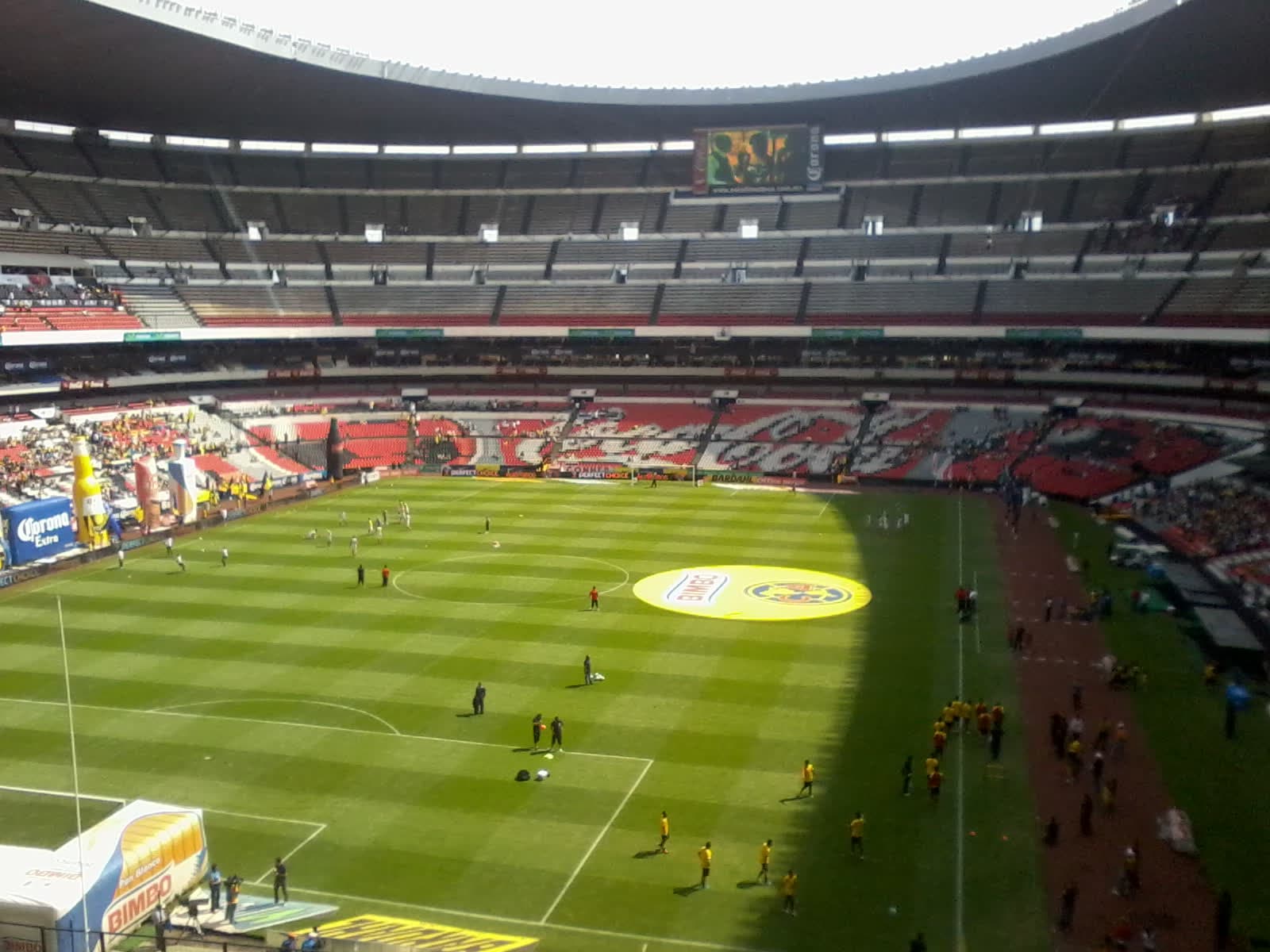
Estadio Azteca
07Azteca is the first stadium to host matches at how many different World Cups?▶
Three — 1970, 1986, and now 2026. No other stadium on Earth has done it.08Two of football’s most famous goals were scored there four minutes apart, by the same player, in the same match. Which goals?▶
Maradona’s “Hand of God” and the “Goal of the Century” — both against England in the 1986 quarter-final. One stadium, one afternoon, football’s biggest crime and its greatest masterpiece.09How high above sea level is Mexico City?▶
About 2,240 metres (7,350 feet). The air carries roughly a quarter less oxygen than at sea level — visiting teams genuinely train for it, and the ball flies measurably differently.10Who won the two finals previously played at Azteca?▶
Brazil in 1970 (Pelé’s last World Cup) and Argentina in 1986 (Maradona’s tournament). Azteca finals tend to crown legends, which is some pressure for 2026’s bracket.
Stadiums that lie about where they are
A GeoRiddler favourite: most “city” stadiums in this tournament aren’t in the city on the ticket. Pin these on a map and you’ll see the pattern.
11The “New York New Jersey” final is in which state?▶
New Jersey. MetLife Stadium sits in East Rutherford, NJ — about 10 km west of Manhattan, across the Hudson. New York gets the skyline shots; New Jersey gets the football.12Boston’s matches are actually played in which town?▶
Foxborough, Massachusetts — Gillette Stadium, roughly 35 km southwest of Boston. The town has about 18,000 residents and a stadium that holds nearly four times that.13The “San Francisco Bay Area” games are in which city?▶
Santa Clara — Levi’s Stadium, about 60 km from San Francisco and much closer to San Jose. San Jose is the bigger city anyway, but tickets don’t say that.14Dallas’s stadium is in which city, exactly?▶
Arlington, Texas — AT&T Stadium sits between Dallas and Fort Worth, belonging to neither and claimed by both.15Los Angeles matches are played in which city?▶
Inglewood — SoFi Stadium. To be fair to LA, Inglewood is at least inside the urban sprawl. Foxborough has no such excuse.16Which mountain looms over Monterrey’s stadium?▶
Cerro de la Silla — “Saddle Hill” — the saddle-shaped peak that defines the city’s skyline. Estadio BBVA was deliberately designed with an open end so the mountain is visible from the stands. Best backdrop of the tournament, not close.
Borders, distances, and clocks
17Which two host cities are closest across an international border?▶
Seattle and Vancouver — about 200 km apart. Group-stage fans could plausibly watch a match in one country at lunch and another that evening.18Which host city sits nearest the geographic centre of the contiguous United States?▶
Kansas City. The actual centre point is in rural Kansas a few hours west — Kansas City is as middle-of-the-map as the tournament gets.19In summer 2026, Mexico City’s clocks match which US time zone?▶
Mountain time — and this trips everyone up. Mexico abolished daylight saving in 2022, so while Dallas and Kansas City spring forward, Mexico City stays put at UTC-6. Three countries, three time zones on paper, and a calendar full of asterisks. (This exact mess is why we built a kickoff-times site.)20Roughly how far apart are the tournament’s two most distant host cities, Vancouver and Miami?▶
About 4,500 km — farther than London to Tehran. Probably the most spread-out World Cup ever staged, and a rough month for any fan trying to follow their team on the ground.
Extra time
If the time-zone question hurt, that’s the one we can actually help with — worldcupkickofftimes.com has every match converted to your local time, so the only thing you can miss is a penalty. And if the host-city questions were the fun part, our US geography trivia covers the rest of the map between the stadiums.